
Once More to E.B. White
On the man and the essay
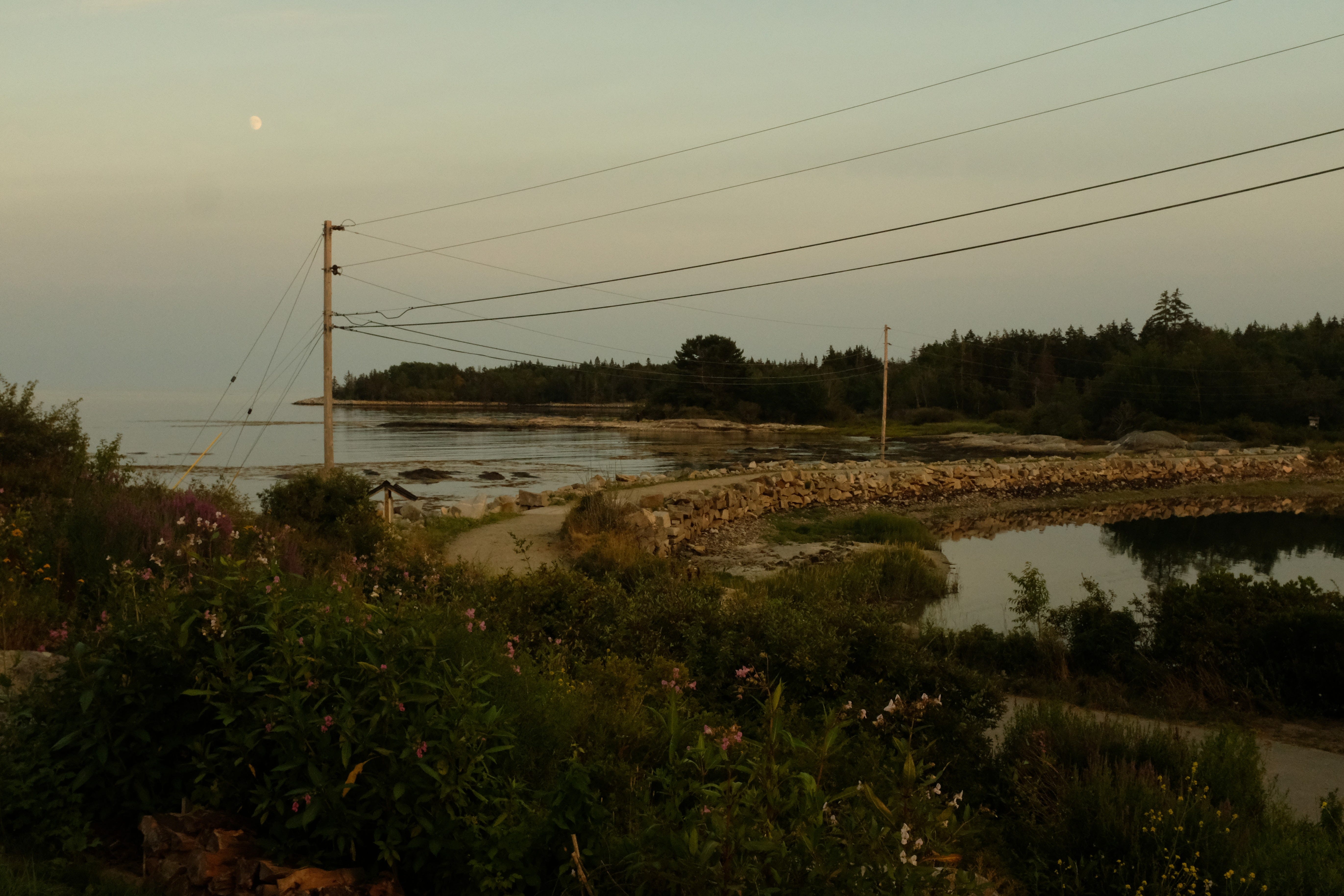
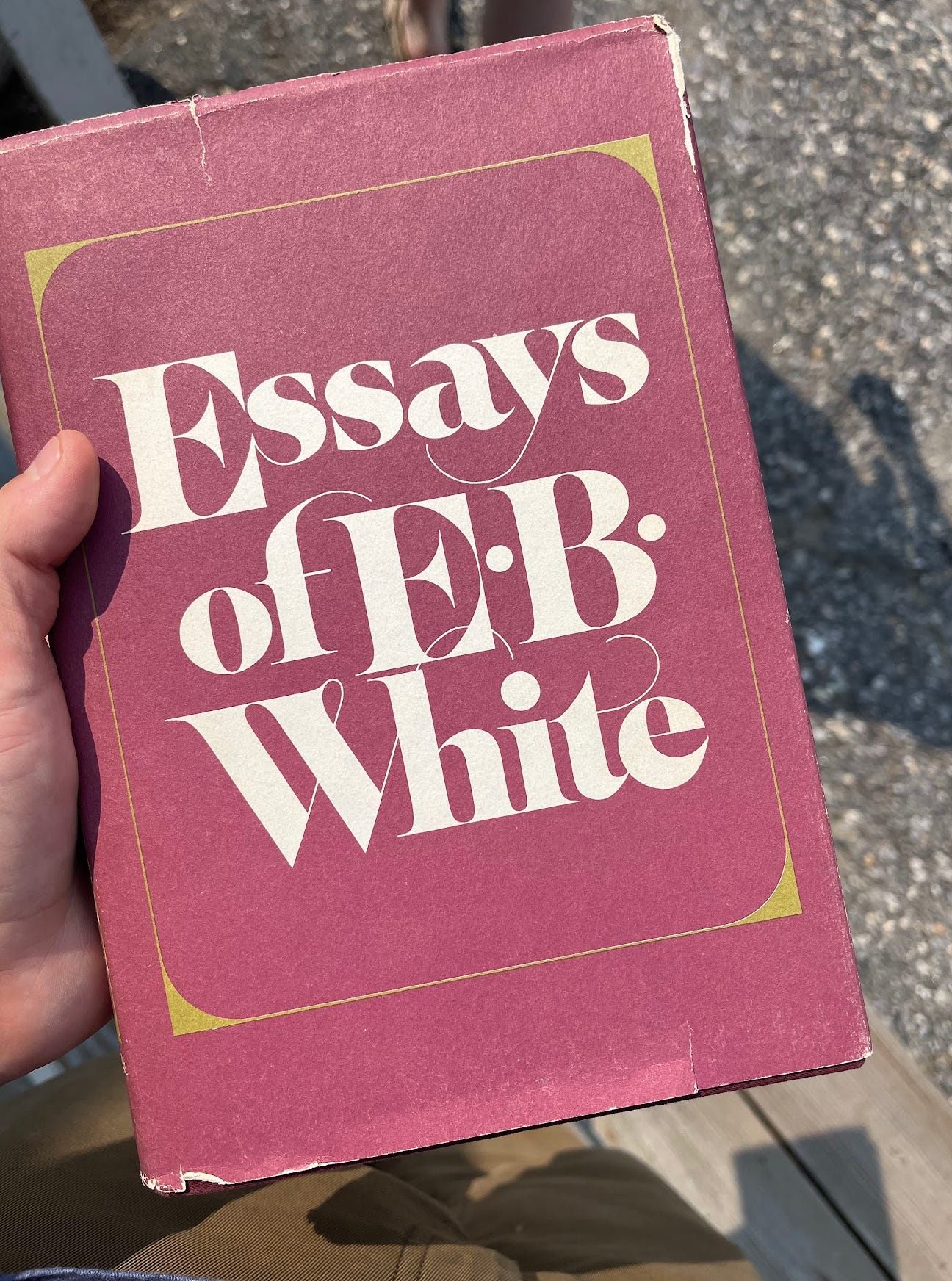
Vacation gives one the rare chance to read in a meandering way that work and study alike deny. Vacationland, which is what Maine calls itself on its license plates, affords one lots of material from which to pick. One can find that material in bookstores, yes, but also at the antique malls lining Maine’s main roads, from Kittery up and out. The books in these malls’ stalls are curated by chance, or else by the deceased, whose libraries their heirs did not claim, so the offering itself is a sort of meander through life. It is in one such mall that I picked up selected essays of the great twentieth century writer E.B. White. This is a post in praise of him.
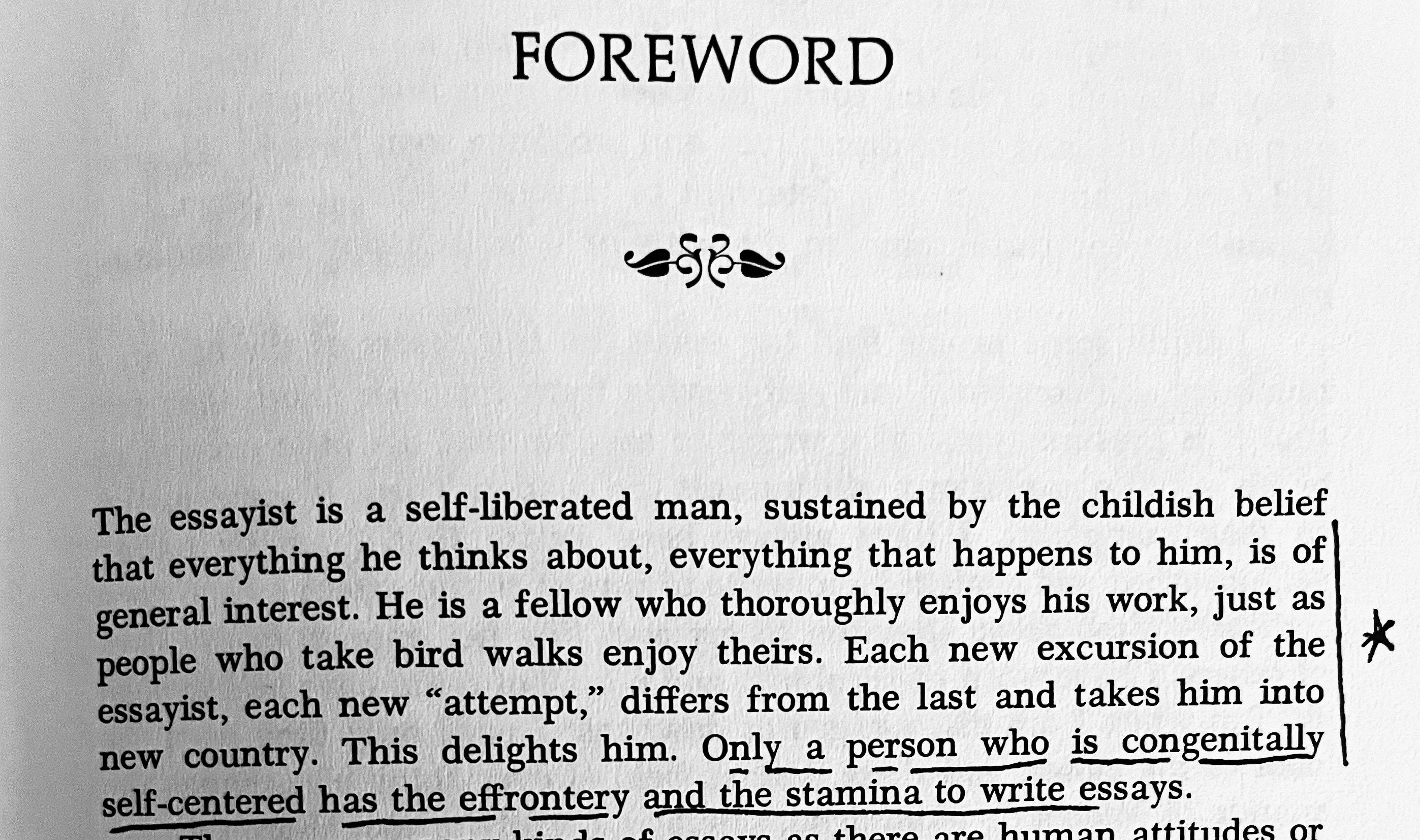
Essays are good for the vacationing (and so, with luck, meandering) reader because the form itself is often a meandering one. Many essays do not build to a recommendation nor work with other chapters in concert to make some historical or theoretical or critical case. They simply invite the reader to meander alongside them, with no particular value proposition save the pleasure of the outing. The good ones make it worthwhile. E.B. White’s foreword to his own essay collection is an apology to this effect:
“The essayist is a self-liberated man, sustained by the childish beleif that everything he thinks about, everything that happens to him, is of general interest. he is a fellow who thoroughly enjoys his work, just as people who take bird walks enjoy theirs. Each new excursion of the essayist, each new “attempt",” differs from the last and takes him into new country. This delights him. Only a person who is congenitally self-centered has the effrontery and the stamina to write essays.”
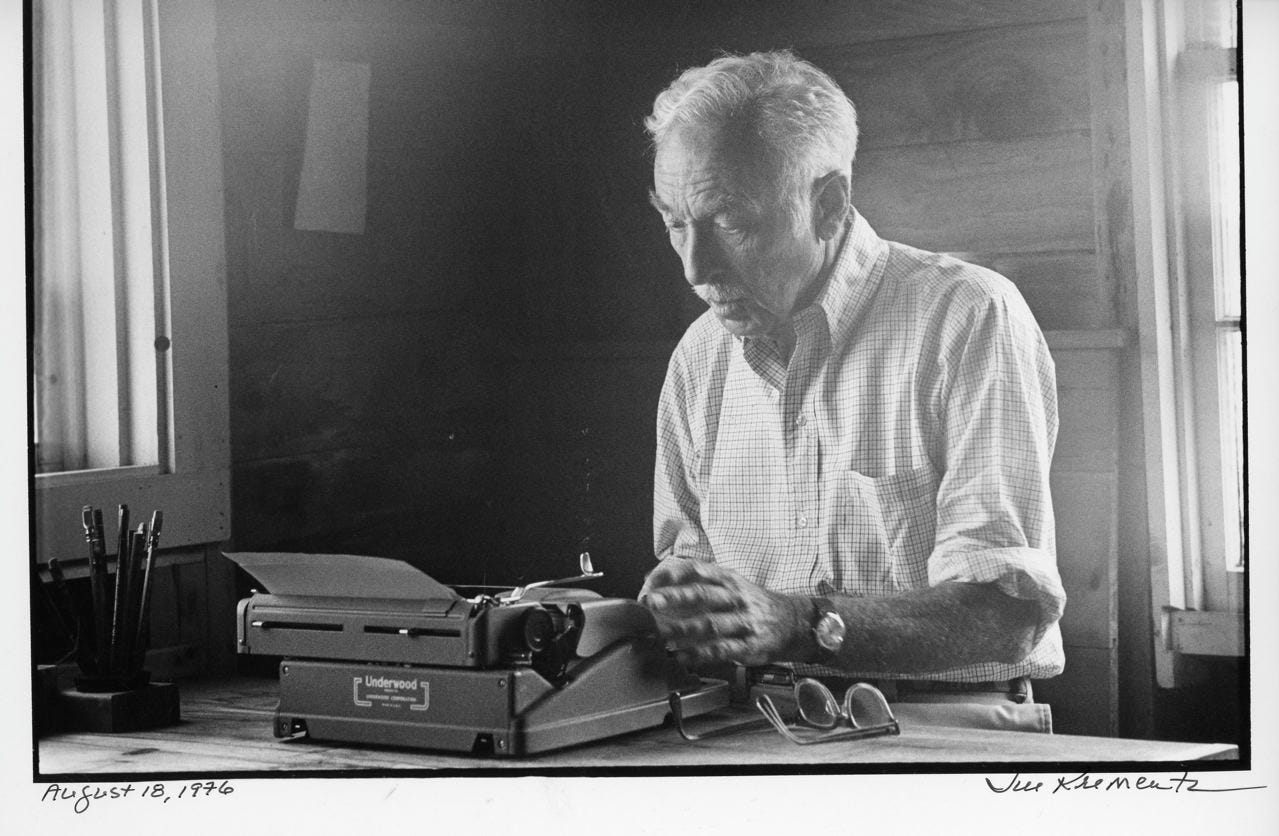
This foreword struck me because I did not first think of E.B. White as an essayist. He was introduced to me, like I imagine he was to some of you, as the author of several wonderful children’s books. These include Charlotte’s Web, Stuart Little, and The Trumpet of the Swan. When I grew older I met him again as the co-author of the The Elements of Style, and so did not even think of him second as an essayist, but rather a stylist or some sort of editor. Then, not long ago, while wandering through the Wiscasset Antique Mall, I picked his collection off a shelf and met E.B. White the essayist for the first time.
The first entry I flipped to was “Coon Tree”, written in 1956. When I went to hyperlink that title for you I learned the essay isn’t easily findable online. That is fitting, for “Coon Tree” is a gentle protest against the march of time, the invasion of modernity into the American home, and the attendant loss of the little inconveniences which give our life texture. You have to go find the essay, which I think would make White smile. When you do, you’ll see it begins as a meditation on the family of raccoons holed up outside White’s farmhouse, but then it meanders through the that farmhouse, pausing to savor all those things he fears will soon be gone. Take this biting bit:
…We have two stoves in our kitchen here in Maine - a big black iron stove that burns wood and a small white electric stove that draws its strength from the Bangor Hydro-Electric Company. We use both. One represents the past, the other represents the future. If we had to give up one in favor of the other and cook on just one stove, there isn’t the slighest question in anybody’s mind in my household which is the one we’d keep. It would be the big black Home Crawford 8-20, made by Walker & Pratt, with its woodbox that has to be filled, its water tank that has to be replenished with water, its ashpan that has to be emptied of ashes, its flue pipe that has to be renewed when it gets rusty, its grates that need freeing when they get clogged, and all its other foibles and deficiencies. We would choose this stove because of the quality of its heat, the scope of its talents, the warmth of its nature (the place where you dry the sneakers, the place where the small dog crawls underneath to take the chill off, the copmanionable sounds it gives forth on cool nights in fall and on zero mornings in winter)….
The American kitchen has come a long way, and it has a long way to return before it gets to be a good room again. Last fall, the American Society of Industrial Designers met in Washington and kicked the kitchen around a bit. One of the speakers, I remember, said that he will soon get to the point of eating “simply and fast.” He said we would push a button and peas would appear on a paper plate. No preparation at all.
It really comes down to what a man wants from a plate of peas, and to what peas have it in their power to give. I’m not much of an eater, but I get a certain amount of nourishment out of a seed catalogue on a winter’s evening, and I like to help stretch the hen wire along the rows of young peas on a fine morning in June, and I feel better if I sit around and help with the shelling of peas in July. This is all part of the pageantry of peas, if you happen to like peas. Our peas didn’t get planted until May 9 this spring - about three weeks later than the normal planting time. I shall hardly know what day in July to push the button and watch them roll out onto the paper plate…
Whites goes on, a page or so later, about that wood-burning Home Crawford 8-20 made by Walker & Pratt:
My stove, which I’m sure would be impractical in many American homes, is nevertheless a symbol of my belief. The technologists, with their vision of happiness at the core of rock, see only half the rock - half of man’s dream and his need. Perhaps success in the future will depend partly on our ability to generate cheap power, but I think it will depend to a greater extent on our ability to to resist a technological formula that is sterile: peas without pageantry, corn without coon, knowledge without wisdom, kitchens without a warm stove…
For those wondering whether E.B. White would so rhapsodize about housework if he had to do it for a living, trust he is alert to the risk of this tone-deafness, and makes plenty of exonerating noises about his love for a wood stove being a sign of luxury, etc.
Still, it is hard not to be taken in at least partially by his point (he is certainly not the only one to have written about analog charms - “Coon Tree” reminds me much of Addison Del Mastro’s great pieces on good friction, for example). It accords with an undeniable fact we all know: that sometimes things that defy our easy control give us more joy, which is why our favorite songs sound better when they come on the radio than when we select them on our phones.
One can go further if they’ll indulge a little high-flying thought. One could extend White’s comments from the stove to the form of the essay itself. A large language model may provide a sterile and bulletized summary for far less reader effort. But without an essay’s digressions and unlikely characters, these its blessed “foibles and deficiencies,” it would not give the same warmth.
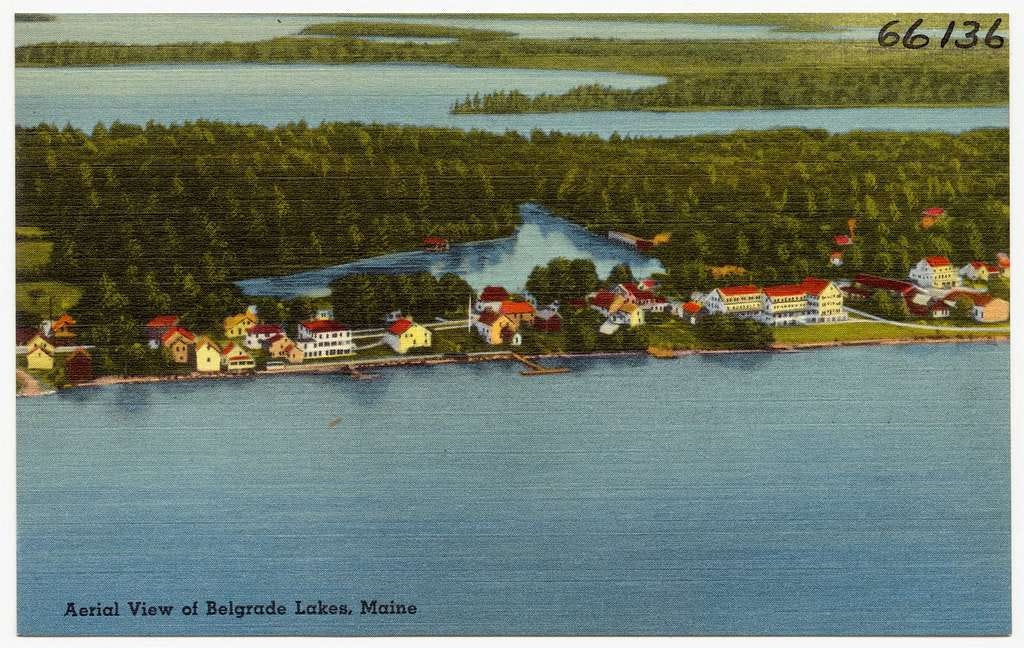
The next essay I read also considers the passage of time. It is “Once More to the Lake”, written in 1941. One can definitely find it online because it is rightly famous. It tells of White’s return to the site of his childhood summers, somewhere in the Belgrade Lakes region of Maine, his own son in tow. It is short and magnificent, a good read for any time of life or the year but particularly in August, for it is a comment on what a summer is. There is more to that comment than any quote can capture but here is one:
"Summertimes, oh, summertimes, pattern of life indelible, the fade-proof lake, the woods unshatterable, the pasture with the sweetfern and the juniper forever and ever, summer without end; this was the background, and the life along the shore was the design, the cottagers with their innocent and tranquil design, their tiny docks with the flagpole and the American flag floating against the white clouds in the blue sky, the little paths over the roots of the trees leading from camp to camp and the paths leading back to the outhouses and the can of lime for sprinkling, and at the souvenir counters at the store the miniature birch-bark canoes and the postcards that showed things looking a little better than they look. This was the American family at play, escaping the city heat, wondering whether the newcomers in the camp at the head of the cove were “common” or “nice,” wondering whether it was true that the people who drove up for Sunday dinner at the farmhouse were turned away because there wasn’t enough chicken.
It seemed to me, as I kept remembering all this, that those times and those summers had been infinitely precious and worth saving. They had been jollity and peace and goodness…”
Looking at it now, perhaps the passage is bit saccharine, but only when stripped of context. The essay is not. It is as much about mortality as it is about summer, about the “creepy sensation” White gets at suddenly feeling he is his father and his son, him, as his son does all the same things at the lake he once did and recalls so vividly. On its shores and in the canoe time seems to him circular, death as a return, whereas in “Coon Tree” it is a question of linear progress and the wisdom of that progress.
Sometimes lines, sometimes circles. That is meandering. And what an achievement of White, to have written something for all of life’s moments: the children’s books, the reference books, the essays of time doubling back on us, and those also on time passing us by.

“One Man”s Meat” is another collection of White essays, and a couple have some interesting observations on military & international affairs as WWII unfolded.