
Not Even Lucifer
Death then Life at Treblinka
Welcome to Garrison Notes, a letter of marginalia from the education of a soldier. Today’s letter was to be a note on the stories of Shirley Hazzard, who was born on this day in 1931. But a post by alex kershaw reminded me at once that this week marks International Holocaust Remembrance Day (a holiday declared by the UN General Assembly, not to be confused with Yom HaShoah, established by the Knesset) and of a past trip to Treblinka. Those reminders moved me to record some thoughts on Treblinka instead. Thank you for reading. Your thoughts are eagerly welcomed.
Good morning,
It’s not clear to me that we can rank our experience in a gradient from highest bliss to deepest sorrow on some universal scale. For the same reasons we cannot render human acts from the noblest to the most depraved. We know too much only relatively, and we struggle to transcend our selves. This much is suggested in conversation with any toddler or soldier or tenured professor.
But if we could somehow array man’s depravity and suffering in an ordinal way, we might find at the black end of that darkening line the death camp of Treblinka. It was the third and largest of the three death camps built by the Nazis in Poland under Aktion Reinhardt, the others being Belzec and Sobibor. If today Treblinka’s name is obscure, it is perhaps only because Treblinka was so successful in the conduct of its task.
Unlike Auschwitz, there was little other business at Treblinka besides killing. The labor subcamp at its largest housed fewer than a thousand Jews.1 Of the roughly 897,000 people the Nazi murdered at Treblinka, the vast majority died the day they arrived, such that the inmate lifespan we measure in hours. Much of the murder occurred in a frenzy from August, 1942 to February, 1943 following a mid-July order from Heinrich Himmler to empty Poland of Jews.2
Arrivals, including virtually all of the Warsaw Ghetto, came by train. They arrived at a false station the Nazis built to fool them, complete with a false Red Cross tent. Then they were undressed, shaved, and the women were walked down what was called the Himmelfahrtstrasse (“the road to heaven,”) and killed. Those too weak and the children too small to make the walk were shot in the neck at a place called a hospital.3
That inmates at Treblinka lived only hours meant there were few opportunities for escape, and so there are few survivor accounts. Confounding matters is the fact that the Nazis shut the camp down in 1943 before it could be liberated, wiped out nearly all physical trace of it, and exhumed the dead from their mass graves for incineration. We know about Treblinka thanks to interrogations of former guards, administrative records, the writing of Vasily Grossman, and the testimony of the few survivors.
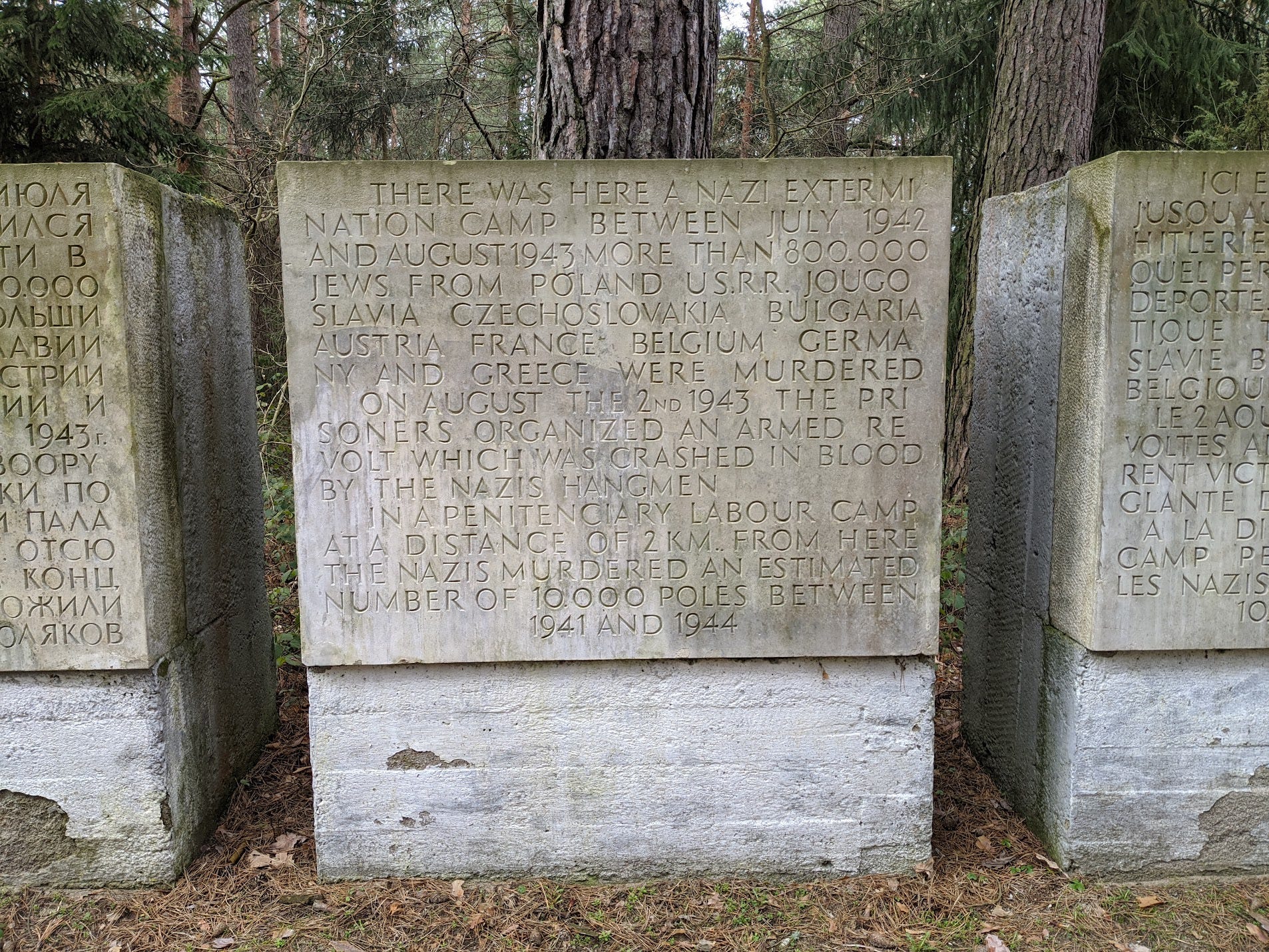
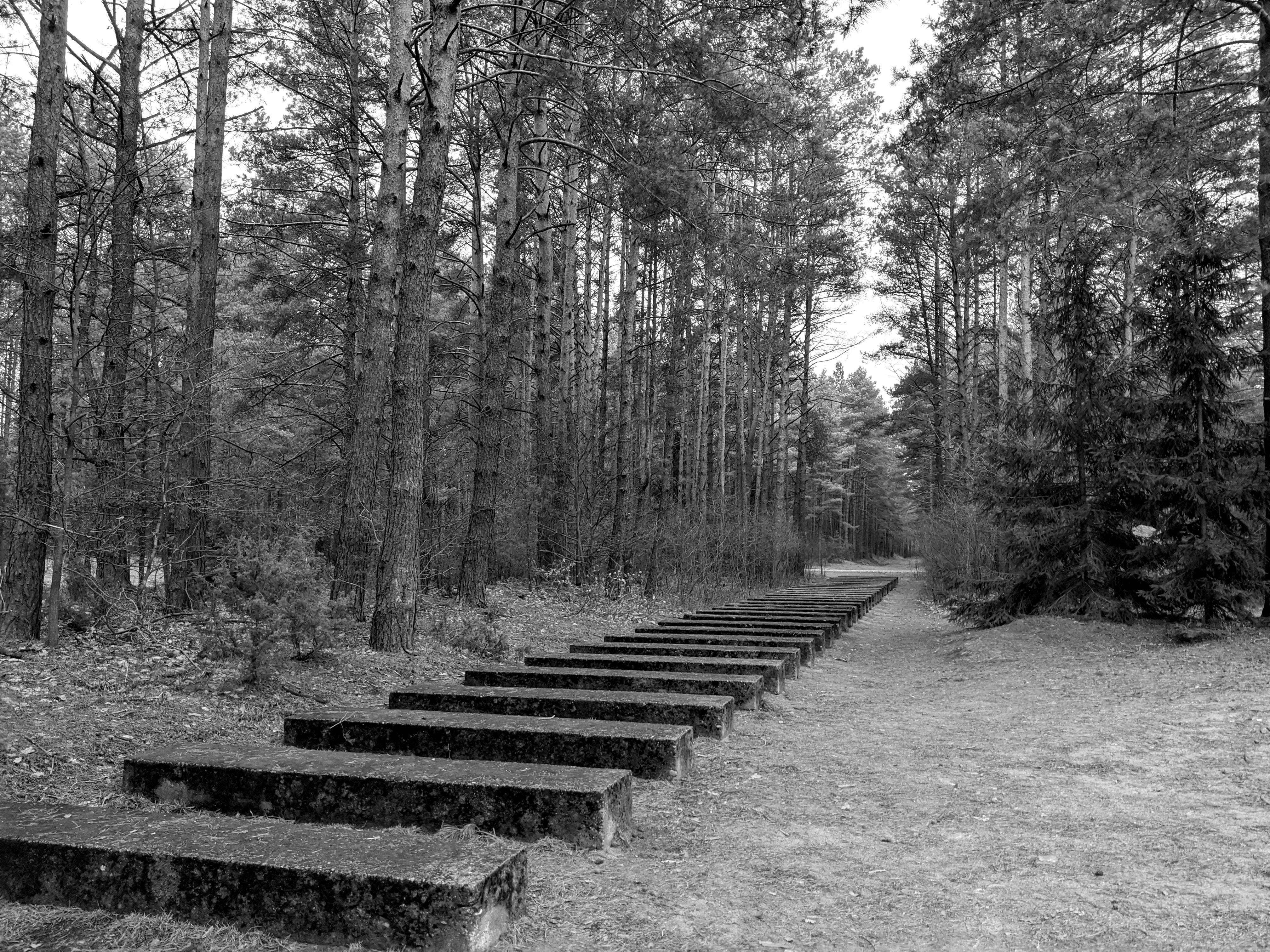
It’s these Treblinka survivors I want to consider first. The existence of the camp it is the sort of thing I would prefer to ignore. There is enough despair in the world at any given moment that such trips back to history’s darkest places seem redundant if not cruel. But Treblinka also commands our attention as an astounding example of the human will to live. That will is embodied in Treblinka’s 67 survivors.
Of those 67 survivors, nearly all escaped on August 2nd, 1943. The few hundred retained for labor burnt the camp to the ground after using a duplicated key to open the SS arms room, shooting a raft of guards and alighting the camp fuel tanks (Grossman’s “second sun” below). Though most escapees were gunned down in the woods of east Poland thereafter, some survived. Rather than attempt to rebuild and continue operation, the Nazis razed what was left.
Among these escapees were Jankiel Wiernik, a sonderkommando who upon escaping Treblinka almost immediately authored a secret account of it for posterity, then somehow found the gumption to fight in the Warsaw Ghetto Uprising (and survive). His testimony in later trials brought several Nazis to justice. It is he who later said that “not even Lucifer” could have conjured such a crime or place as Treblinka.
Another survivor of the uprising was Chil Rajchman, whose Yiddish memoir The Last Jew of Treblinka saw publication in 1997. In spare language devoid entirely of ego Rajchman relates the life of the few slaves who under threat of death kept Treblinka running. The memoir ends with a short timeline of the rebellion and the life of hiding that followed for the few not gunned down in the woods around the camp.
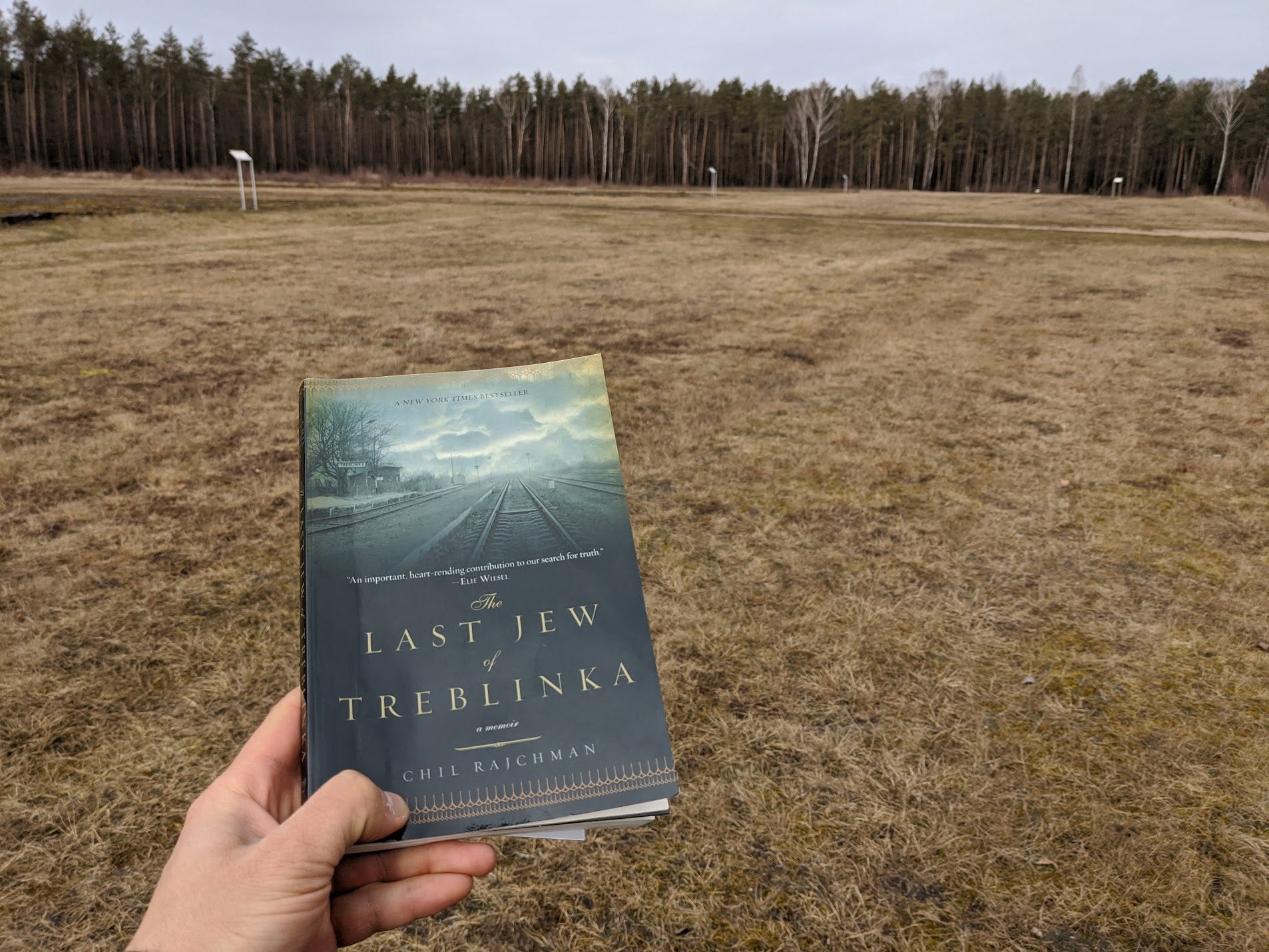
If death took the form of a place on earth it would the Upper Camp of Treblinka. Likewise if there are immortal men they are Treblinka’s rebels. They will live forever because there will never be a situation as hopeless as theirs yet they still found in themselves a will to live, and so their example will always be a flag to which one can rally in a dispirited moment.
Among the first to hear these stories and recognize their power was Vasily Grossman, the giant of Soviet war reportage and letters, then a correspondent for Krasnaya Zvezda. He too must be thanked for his essay “The Hell of Treblinka,” which without propaganda organized the accounts Grossman gained from locals and survivors the Red Army found in the woods to render for posterity what happened. Here he is on the rebellion:
"There was one happy day in the living Hell of Treblinka...new flames soared into the sky—not the heavy flames and grease-laden smoke of burning corpses but bright wild flames of life. The camp buildings were ablaze, and to the rebels it seemed that a second sun was burning over Treblinka, that the sun had rent its body in two in celebration of the triumph of freedom and honor."
A twisted coda: The dualistic absurdity of Treblinka - the depravity and the hope - is compounded still further by what happened to such accounts under the subsequent Soviet rule of Eastern Europe. Grossman worked closely with members of the Jewish Anti-Fascist Committee, included Solomon Mikhoels, to publish an account for the Soviet community of the Holocaust called The Black Book.
Grossman wanted to contribute “The Hell of Treblinka” and other essays to The Black Book. But Stalin banned The Black Book in 1947 for telling of the Holocaust’s Jewish dimension (much like Grossman’s masterworks Life and Fate and Everything Flows were suppressed for telling what Gorky once in a letter to Grossman called “the dirty truth”). The Black Book only got a hearing beyond the Iron Curtain. And though Grossman survived, behind that Iron Curtain Mikhoels was murdered by the secret police of Soviet Union (something this newsletter covered two weeks ago).4
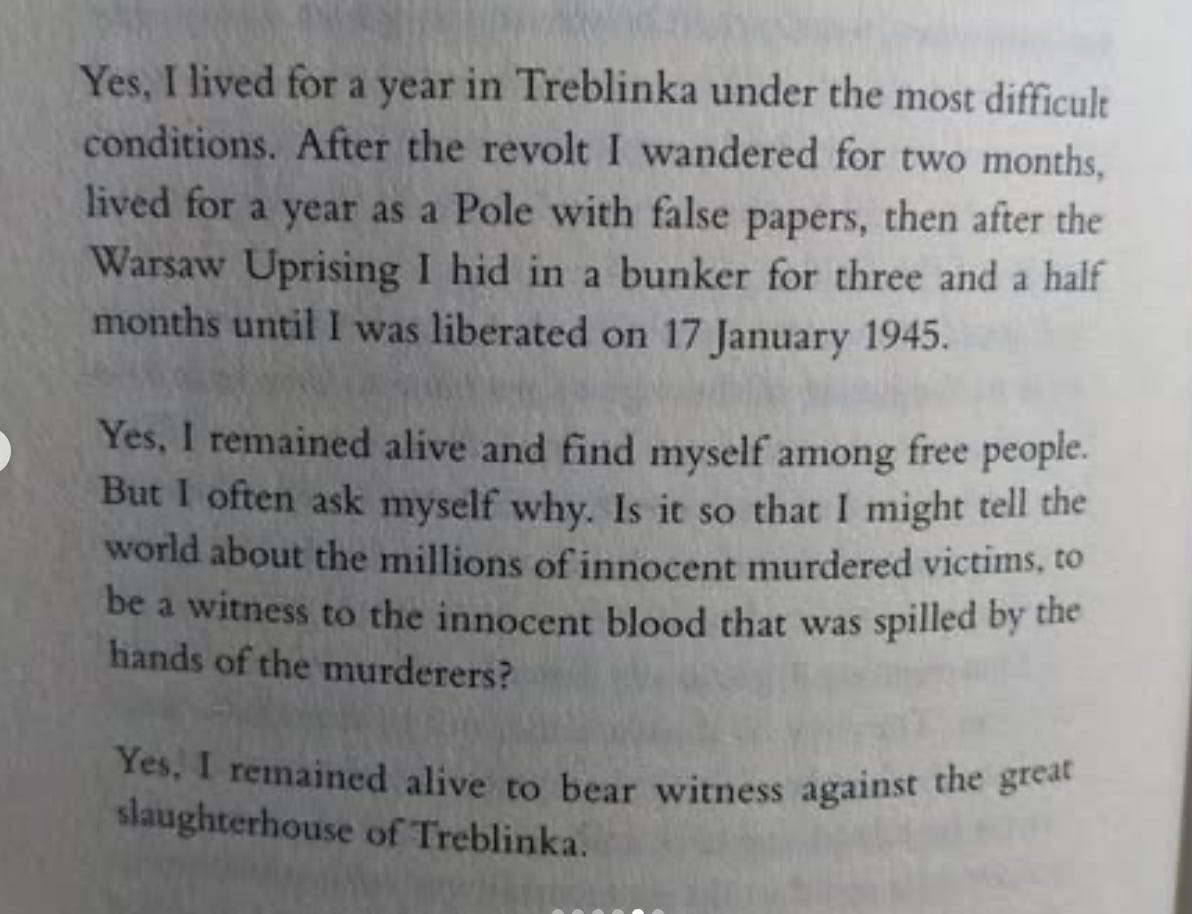
Many causes for sorrow. But if the likes of Rajchman and Wiernik can take heart, so too can we. Let’s leave the last word to them. Here is how Rajchman closes his memoir of Treblinka:
Webb, Chris, and Chocholatý, Michal. The Treblinka Death Camp : History, Biographies, Remembrance. Hannover: Ibidem Verlag, 2014. See pages 16-26 for a description of the labor and death camp specifications.
Lewi Stone, “Quantifying the Holocaust: Hyperintense kill rates during the Nazi genocide” ScienceAdvances, January 2019
Webb and Chocholaty, 51
See Popoff, Alexandra. Vasily Grossman and the Soviet Century. New Haven: Yale University Press, 2019 - the chapter “Soviet Tolstoy”